
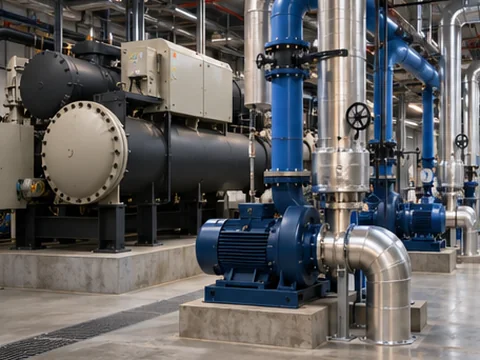
Trace cooling from the load to heat rejection
Document where cooling begins and ends for each party. A customer may own a rack and parts of the cooling assembly while the facility provides chilled water to a defined connection. Identify the operator of the cooling distribution equipment, the party that monitors and maintains it, and who can isolate the affected equipment. Include dependencies on pumps, power, controllers and external water supplies.
In direct liquid cooling systems, a component failure can reduce available capacity or lead to a release near valuable electronics. The risk review should distinguish physical wetting or other damage from workload throttling or downtime associated with insufficient cooling. Obtain engineering narratives showing system boundaries, detection and isolation arrangements, and the extent to which adjacent halls share common services. The Berkeley Lab data center energy usage report provides context on changes in cooling approaches.
Account for temporary operation, retrofit and restoration
During a retrofit, temporary cooling may have its own capacity limits, installation dependencies and service contract. Determine what loads can continue if a critical temporary component fails and who approves transfer between old and new systems. Verify which property is part of the project and which belongs to the operating facility or customer. A phased acceptance sequence should record dates, testing conditions and responsibility for maintenance and repairs.
A credible restoration estimate includes the time to establish the cause, source matching equipment, perform repairs and recommission the system. Confirm whether the project has compatible pumps, valves, controls or specialist connections available. For equipment with a long replacement period, evaluate whether the proposed service agreement includes timely access to temporary or alternate capacity.
Example — physical leak and partial capacity loss
A connection fails after equipment has been handed over while an adjacent hall is still undergoing commissioning. One customer’s hardware is damaged, and the facility must load-shed in another hall while the system is stabilized. The business should identify the exact facilities and components affected and preserve the maintenance records and operating chronology.
Review who owned the damaged property and who accepted responsibility for the equipment at handover. Examine the relevant property, equipment breakdown and liability coverage and contract wording. If the adjacent hall’s delayed startup has no physical damage of its own, the question becomes whether the applicable form and circumstances support a covered delay. Review the insured project and loss triggers with the brokers and insurers for each affected entity.
Underwriting evidence to assemble
- Cooling system boundaries, responsible parties and diagrams that show where a common system serves multiple halls.
- Maintenance practices, remediation and access procedures, and records of commissioning and acceptance.
- Detection and isolation arrangements, known prior incidents and modifications in progress.
- Spare component strategy and contracts for restoration or temporary services.
- Equipment values, ownership, customer contracts and realistic phased recovery times.
For insurance and loss valuation, see property, equipment breakdown and business income.
Set the buyer’s insurance assumptions before selecting a design
Bring engineering, facilities, procurement and finance together before requesting insurance terms for a new hall. Engineering should state what load the installation is intended to support under normal, maintenance and constrained conditions. Facilities should identify who has the equipment, people and facility access to maintain service during those conditions. Procurement should identify where a bid assumes that water, power, controls, facilities work, temporary capacity or a performance guarantee will be furnished by others. Finance can then estimate the financial consequences at each level of available load. A useful submission follows these assumptions from the drawings through the service obligations and the questioned insurance provisions.
Compare direct-to-chip cooling and immersion cooling using the actual equipment proposed. Each design benefits from a property register divided into facility systems, technology cooling equipment and electronics. Include fluid inventory if material, shared infrastructure, tenant assets and leased equipment. Ask which replacements require proprietary components or qualified contractors. Standard lead time by equipment category may understate restoration if a particular series is obsolete or a substitute requires a new approval. Record where ordinary floor plans diverge from the systems that actually support the building.
Price capacity risk by hall and by type of loss
First estimate the cost if cooling equipment itself sustains physical damage. Then estimate the cost if that equipment remains operational but a shared dependency prevents expected service. Estimate a third case where a disruption is handled through change of mode, partial service or relocation. In each, identify the initial cause, the equipment or business affected, separate costs to repair or preserve service, and how customers can claim contractual relief. Finance can use a dated schedule of service income, continuing expense and additional operating expense to show what each scenario would mean.
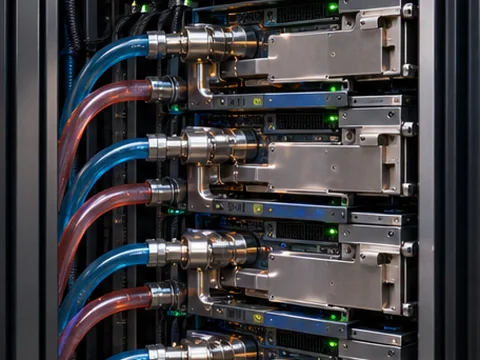
A hall may recover a usable operating load well ahead of permanent restoration. Estimate which customers could accept that reduced capacity and how their agreements define a service interruption. A customer who can relocate computing work may ask the operator to reimburse a separate expense, while an operator that relocates work itself may bear the cost to preserve service income. Potential insurance treatment depends on the terms and triggering event. Underwriters and claim staff need to know who earns the income and incurs the loss. Use the chilled water loop analysis to identify capacity and earnings exposed to one distribution network. Compare the role of cooling thermal storage when storage works but its delivery equipment is unavailable.
Verify what the contractor’s guarantee actually measures
A contractor's quote might guarantee tested output at an acceptance point, while a tenant agreement uses different time intervals, operating loads or measurement locations. Compare those promises with the responsibilities of other contractors and operators. Ask what evidence each party needs before deciding that the work passed, and who can approve use when a test is complete but an exception remains open. Obtain a written disposition for outstanding items and identify changes that must be reported to insurers. An indemnity, warranty or performance promise should be evaluated alongside, but separately from, the issued policies.
Review the supporting responsibility schedule for coolant distribution units, including any coupled customer and facility equipment. A supplier may furnish only the unit while the site is responsible for water quality, electrical service or controls integration. Compare equipment orders to the insurance schedules and test acceptance for material conditions the owner expected the bidder to assume.
Scenario — two towers are available, but heat rejection is restricted
A facility with several running towers loses part of its usual makeup water supply during a high-load period. Usable capacity falls across two data halls. Staff schedule a temporary external service and arrange limited workload relocation. A tenant seeks reimbursement, and operators later discover damage to an unrelated mechanical component while reviewing the affected systems. Build a chronology that separates restriction of water supply, observed damage and each decision to reduce service. Identify which losses are supported by separate evidence. A service credit may be due under the tenant agreement even if the site cannot establish the triggering cause needed under an insurance endorsement. Where an external service interruption is asserted, document the supplying entity, property, cause and times of suspension against the written coverage.
Compare that sequence with the cooling tower water dependency guide and the chiller plant breakdown review. The facility should document what was operable, what could actually serve the halls, and which mitigation expenses extended service. Use that evidence to assess property, equipment breakdown, business income, extra expense or other potentially relevant provisions without anticipating a coverage decision.
Create a renewal record that survives a handoff
Keep the approved capacity assumptions, equipment codes and locations, site responsibilities, bid exceptions and insurance notices together. Each year confirm that facility modifications and rack growth have been reflected. Record alternate replacement sources, actual vendor availability and the authority needed to access equipment after an incident. Set an accountable owner for each item in the incident record, including who can provide tenant schedules, issue notices and obtain condition assessments. In a dispute, the ability to distinguish repair, validation, service restoration and lasting impact helps the facility make timely decisions and show which losses it intends to submit or retain.
Reconcile seasonal assumptions with temporary service arrangements
A plan that could support most of the year may be less useful when high outdoor loads coincide with maintenance or another supply constraint. Ask the services vendor to identify conditions on available equipment, mobilization and operating support. Confirm whether the customer or operator can approve temporary work quickly and whether the contract accounts for a regional incident affecting several customers. Review the equipment and expense estimates against the amount of capacity the temporary arrangement can actually restore. Where insurers are asked to consider possible expense protection, collect the relevant terms, anticipated procurement process and basis for the calculation. Track costs the facility would pay in any event so it can isolate the additional measures required by a documented disruption.