
Map ownership, custody and acceptance on one schedule
An equipment purchase order, construction agreement and insurer’s schedule can use different definitions of delivery and completion. A switchboard may be paid for at a fabrication milestone, stored at a third-party warehouse and delivered under a separate transportation contract before the electrical contractor takes physical custody. Identify who holds risk of loss at each step and when the project’s insurance begins to address the equipment. Record values and locations, including temporary laydown, temporary storage and shipment.
The same mapping should cover customer equipment arriving ahead of final completion. Determine whether the tenant, developer or general contractor controls installation, security and access. Read the builders risk property definitions and the applicable inland marine or cargo terms to determine whether equipment in each state of custody is contemplated. A certificate can help confirm what was issued. Review the forms and endorsements when verifying the actual agreement between insurers and insureds.
Review the risks of working next to operating equipment
Tie-ins at a live campus introduce different consequences than the same tasks on a greenfield project. The existing installation could lose redundancy or experience a service interruption even when the new work remains physically undamaged. Document the existing property and the activities that could affect it. Ask who can authorize switching, who controls access to equipment, and what temporary service arrangements support the operating areas during the work.
In an underwriting submission, describe the site’s method for approving change windows, assigning responsibility and escalating a deviation from the approved plan. Use high-level control descriptions and a current phase map. Detailed engineering and contractor procedures should come from the responsible project teams. Discuss existing property limits and exclusions with the owner, and verify any requirements for insurers to approve work or changes in use before the operation occurs.
Separate installation, testing and transfer to operations
An equipment vendor may perform a factory acceptance test. The contractor may carry out installation checks before energization. The operator may then run integrated systems testing that simulates loss of individual supplies and determines whether the hall meets acceptance criteria. Identify where the contracts transfer custody and when each insurer’s restrictions on testing, occupancy or operation may apply. Pinning the answer to a single substantial-completion date can miss transitional exposures.
Build a register by area or system with the anticipated energization date, tests, acceptance authority, substantial completion, occupancy and policy notice obligations. Bring both the construction and permanent insurance teams into the discussion before the testing window. For phased projects, confirm which areas and assets are subject to each arrangement. Pay special attention when one part of the campus generates income while adjacent systems remain under construction.
Example — off-site storage becomes the critical path
An owner buys switchgear for two buildings. The vendor moves the units to a third-party warehouse pending site readiness. A warehouse fire damages one unit. The other was undamaged, but the owner must decide whether swapping the delivery sequence avoids a later revenue loss. Analyze each part of the loss under the relevant contract and insurance terms.
Questions include whether the warehouse is within the coverage territory, whether off-site storage has a separate limit, and whether the damaged equipment is insured property at the warehouse. The project team also needs to establish whether the equipment loss actually affects the critical path. Determine the cost and timing of a replacement, staged energization, rental equipment if suitable, or changes to delivery priorities. Commercial consequences may extend beyond the insured delay.
Review owner and contractor programs together
Later claims can involve allegations about design, installation, testing, physical damage or failure to meet contract specifications. Give each carrier a clear scope of work. An electrical contractor taking design responsibility may need to review professional liability exposures alongside general liability, while a contractor with temporary custody of equipment needs to confirm how that equipment is insured. Review any pollution exposure associated with fuel handling, releases or sitework where the operations warrant it.
Compare insurance obligations to the actual program, including limits, insured entities, completed operations, additional insured wording, waivers and reporting. Identify which obligations have no clear policy counterpart and refer contractual interpretation or negotiation to counsel. Record accepted exceptions and responsibility for obtaining endorsements before work starts.
Prepare the handoff package
- Ownership and value schedules for project materials, owner-furnished equipment, temporary installations and customer property.
- Contract dates and phase map with testing, handover, beneficial use and commercial operation identified separately.
- Site logistics and storage details, security controls, and plans for materials with extended lead times.
- Project schedule with dependencies, float and stakeholder responsibility for delay decisions.
- Limits, sublimits and endorsements requested by the owner, lender and major agreements.
- Contact protocol for incidents and documentation, including parties responsible for notifying insurers and preserving equipment evidence.
For related policy questions, see builders risk and delay in startup and the colocation and service agreement review.
Translate the project delivery model into insurance decisions
On a design-bid-build project, the designer and builder may work under separate agreements. Under a design-build or EPC arrangement, one agreement may cover design, procurement and construction while excluding utility interfaces, commissioning or owner-purchased equipment. On a construction management project, some trade packages may be managed by the construction manager while agreements, payments or responsibility for each scope follow a different path. Put project parties in a responsibility matrix that accounts for the actual delivery model. Identify who signs each contract, who owns the work when it is damaged, who can approve corrections and who has authority to pursue recovery.
Identify which activities call for professional liability review and which put existing or customer-owned property in the contractor’s custody. Compare the construction and operating programs when several project parties perform different work on the same energized campus. For procurement and owner-supplied packages, read the EPC interface guide alongside owner-furnished contractor-installed equipment to identify gaps where a design or installation obligation depends on another organization’s work.
Use a phased checkoff before physical work or commercial use
Keep a schedule that shows what exists at each phase and who confirms the next transition. The documentation should distinguish authority to start physical work from authority to test, operate or hand over the system. Track values, service dependencies, contract notices, and written policy changes with the status of each affected building or system.
- Before site mobilization, confirm dates, declared values, safe access and the organizations that manage temporary installations and third-party property. List any early works scope that precedes the rest of the project’s planned insurance dates.
- Before offsite delivery, compare proposed shipping and storage locations against purchase obligations and the sites described in the project and any available transport or storage terms. Identify who sends written notice of changes and who can authorize safeguarding.
- Before energization, record the assets to be under load, planned testing dates and scope, schedule dependencies and the people authorized to supervise technical work and notify insurers.
- Before temporary or commercial use, confirm which areas can actually operate, when custody transferred, which customer commitments apply, and what notice or approval the project and operating policies require.
- At handoff, confirm issued terms match actual ownership, occupancy and scope. Retain exceptions, acceptance dates and any procedures that continue to apply to adjacent construction.
The greenfield early works guide expands the first checkoff. For mixed construction and live operation, use the phased occupancy and beneficial use guide to organize evidence showing actual physical and commercial use.
Examine losses beyond the newly installed equipment
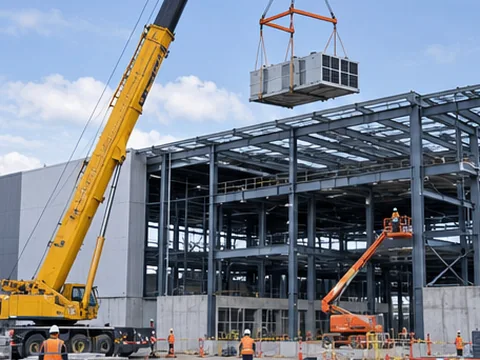
Suppose a contractor arranging equipment placement affects a load-bearing surface. The item being moved remains undamaged, but adjacent permanent work and an existing utility connection require inspection before the operating tenant can resume normal configuration. Preserve the authorization for the work, field condition, pre-work condition and ownership and value of all assets. Identify which part is actual damage, what inspection or emergency stabilization costs were approved and which amounts relate to the ongoing ability to install and test the remaining works.
Discuss the event with the parties arranging project property and operating property insurance, as well as the contractor’s liability team if a third-party demand arises. Examine what the insured’s policy describes as covered property, limitations for existing property, relevant policy dates, and the running or testing status of impaired systems. The critical lift and equipment placement guide identifies who controls the work and where damage can extend beyond the item being moved.
Protect the schedule evidence as decisions change
Maintain a baseline that identifies when equipment, utilities, equipment integration and customer readiness must come together. When delivery moves or the owner elects alternate work, preserve contemporaneous choices, expected costs, timing and the reasons for each decision. After an event, compare supported scenarios with and without the reported loss. Determine what work was already delayed, what remains on the critical path and what can be rescheduled without changing final acceptance. Identify changes to budget or revenue dates separately from the formal decision that modifies the contract.
Use the change orders and critical path evidence guide to organize dated information. Use integrated systems testing and commissioning to determine where testing evidence can affect contract, property damage and delay inquiries. Having the same chronology in the owner, lender, contractor and insurance files reduces uncertainty as recovery options and milestones change.