
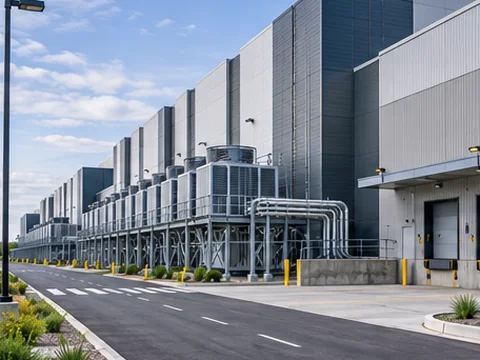
Verify what the location makes possible
A market name does little to establish power availability. The relevant evidence is the utility and system operator, point of service, requested load, accepted studies, commitments, conditions and realistic delivery date. A campus may cross utility territories or wait for third-party work outside the proposed site. List the owner of each line, substation or service on which opening depends, and the record that supports its expected completion.
Do the same for fuel and water. Confirm the party that has agreed to supply service, whether supply is firm or interruptible under the actual contract, permitted uses, and how performance may change in an emergency. Identify how the choice of cooling method affects the type of water or mechanical service required. A proposed service date may differ from physical availability and from the date when the tenant is prepared to begin operations.
Build the project hazard record
Use FEMA’s National Flood Hazard Layer viewer for official flood map information, and check the applicable map, dates, proposed elevations and local study material with project specialists. A flood map does not answer how access roads, utilities and equipment yards may be affected. Document external access and utility infrastructure, plausible interruption across multiple sites and supplier restoration estimates.
Consider wildfire, high winds, severe weather, extreme temperature and local water restrictions where relevant. Check emergency access and which assets the operator or tenant has authority to inspect or restore. Assign an owner to confirm each assumption before a critical purchase, closing or policy decision.

Compare financing and insurance on realistic milestones
For each project site, build a schedule with the dates for site access, utility acceptance, facility testing, first tenant revenue and final handover. Produce a separate dependency list for work controlled by outside parties. If there is uncertainty about the start date, the project team should distinguish an unsupported assumption from an enforceable commitment and evaluate what options exist if service is delayed.
Show insurers the assumed maximum credible duration of repair and the alternate service or site arrangements the business actually controls. Tailor property valuation and time-element discussions to the location and assets, and review the specific cause and sites that outside-dependency endorsements may require. For delayed startup, the coverage review should identify the project loss that is insured, any insurance trigger and which affected financial interest is covered.
Example — availability differs across two candidate sites
A developer is comparing two otherwise similar campuses. One site has a service agreement with several milestones and a required remote substation expansion. The other can start a smaller hall using existing capacity, with later expansion contingent on a separate approval. Compare when income would begin under the tenant agreements and how finance has modeled any interim capacity. Verify which equipment, people and outside providers are available after a major event. Discuss delay assumptions, insurance evidence and possible retained risks before selecting the site.
Bring the decision record to the insurance submission review and the infrastructure financing guide.