
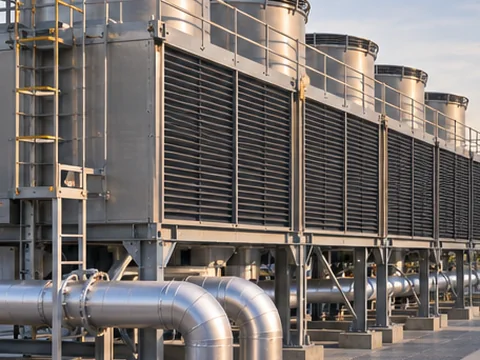
A cooling tower transfers heat from recirculating water to the air. Depending on the facility configuration, its operation can rely on makeup water, treatment services and usable heat rejection capacity during extreme conditions. The Department of Energy cooling tower management guide outlines the tower's water use and the associated management considerations.
Distinguish equipment condition from resource availability
Have operations identify which capacity assumptions depend on particular water quality, volume or provider arrangements. A facility with multiple towers may still use a single makeup water source. Ask who tracks municipal or site restrictions and which obligations apply if alternative water must be obtained. Where the facility agreement uses a broad promise to furnish cooling, check whether the contract accounts for limitations of the available supply and how the notice and mitigation clauses apply.
Example — water restrictions during peak load
A prolonged restriction reduces authorized water availability. The tower is mechanically functional, but the operator has to reduce computing load and incurs costs purchasing temporary services. Document the supplier notice, duration and conditions of the restriction and any equipment damage that occurs during the same period. A supply restriction can lead to real economic loss. Coverage still depends on whether a service interruption, insured equipment failure or other policy trigger is satisfied. If the loss begins at an outside water provider, compare the actual cause, location and scheduled services to the endorsement. Record temporary costs separately from customer credits.
Evidence to bring to placement
- Water supply agreements and an inventory of the physical points where service is received.
- Heat rejection load assumptions and any documented alternative arrangements that can carry the relevant load.
- Water management and condition monitoring records kept by the facilities team.
- Revenue sensitivity to staged reductions by hall, including expenses to arrange contingency services.
Evaluate treatment, inspections and contractor dependency
Review whether water treatment and tower inspection are delivered by one company or divided among the operator and several vendors. Ask if the site can secure qualified help after a regional event when several facilities may compete for the same technicians. Obtain the water use and operating history that supports the reported peak assumptions. Record makeup water availability separately from available recirculating equipment capacity. Those constraints may drive different loads, costs and recovery plans.
The design or service agreement should state whether water availability is an owner-provided condition or part of the contractor's commitment. A lender or tenant may also require notice if the facility's servicing assumptions change. Verify that operations, finance and legal staff understand which fallback method is supported by contract and which depends on a vendor's discretionary availability. Their estimates should account for the time and authority to obtain that support.
Case comparison — maintenance discovers material damage
Assume an inspection finds damage to equipment supporting a tower at peak season. A second tower is functioning but cannot carry the current hall load under the observed conditions. The operator arranges a limited alternative and starts work to restore the original plant. Document inspection findings, prior condition and service history. Ask the policy reviewer to distinguish gradual deterioration from a potentially covered breakdown or other covered cause, applying the form and investigation. Track costs for ongoing treatment and normal service separately from emergency measures and repair. Check how the contract calculates capacity reductions, temporary service cost and any related credits.
When choosing a time-element limit, model both physical damage and a supply restriction without damage. Estimate the income and added expenses for each, then identify any amounts the operator would retain under actual policy terms.