
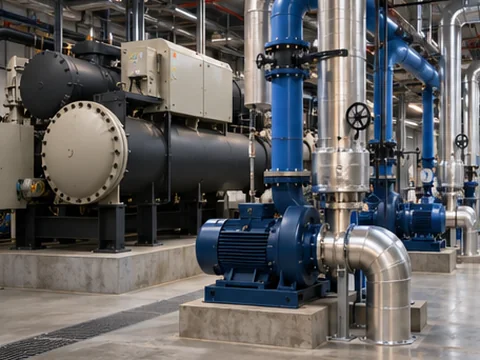
A campus chilled water network can serve buildings that open at different times and have different tenants. A property or earnings schedule organized by building may therefore miss a shared plant or distribution exposure. The Department of Energy data center design guide describes cooling and environmental considerations for a variety of facility designs.
Put the isolation boundaries on the same plan as the revenue
Ask facilities to show which buildings and racks would lose service if a common component or distribution segment were unavailable. Include campus sections designed to operate independently as well as those that can be isolated only during planned maintenance. Finance should use those boundaries to associate affected capacity, continuing expenses and contracted income by hall. A campus-level estimate can conceal a high-value exposure in a single distribution segment.
Example — distribution leak during occupancy
Water escapes from a branch connection after an expansion is in service. The adjacent hall sustains property damage. An occupied hall elsewhere remains dry but is temporarily unavailable while the network is investigated and restored. The repair contractor invoices both emergency response and permanent reconstruction. Document the damage locations, asset ownership, time of each interruption and evidence for any temporary measures. Review the policy's wording for covered damage to insured property and the associated earnings loss. If an outside utility or independent owner supplies chilled water, review any service interruption wording for the relevant property, service and cause of failure.
Put allocation in the underwriting submission
- Diagram showing common supply and return paths, the sections that can be isolated and the load consequences.
- Physical boundaries of construction, occupied operations and separately insured third-party assets.
- Expected repair sequence, suitable temporary service arrangements and mobilization estimates under actual contracts.
- Rent or service income by affected area, any waiting periods and the distinction between permanent restoration and staged return.
Determine where campus concentration actually sits
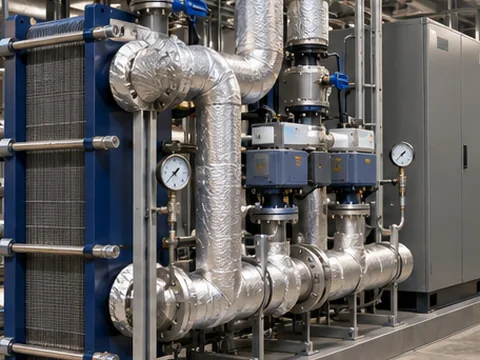
An engineering review should identify branches that can be removed from service independently and the operating consequences if pumps or controls are shared across those branches. Use the map to test whether income models based on individual buildings adequately describe common dependencies. Where an independent contractor owns a utility segment, compare its service contract and insurance obligations to the limits proposed by the operator. If the policy has location-specific requirements for insured utility property, verify where the segment is physically located and who can document its condition after a loss.
Case comparison — an outage originates outside the premises
Imagine the campus purchases cooling from an adjacent independently operated plant. A major interruption at the supplier cuts capacity, but no component is damaged in the customer halls. Some hall contracts allow temporary service suspension and others offer only narrow exceptions. Request supplier evidence and record the initial cause, duration and affected capacity. Confirm who pays for pressure testing, flushing or other work needed before tenants can resume use, as appropriate to the actual event. The insurance review must establish whether the specified external services and the actual failure fit the policy wording. Receipt of a refund from the supplier does not determine policy treatment of the operator's losses.
A good buyer review distinguishes equipment values, disputed contractor amounts, temporary services and lost income by building. Compare the recovery estimate with the time needed to restore enough useful capacity, establish stable service and obtain any necessary customer acceptance for each hall. Document whether alternate cooling can preserve full contracted service or merely support a phased return.