
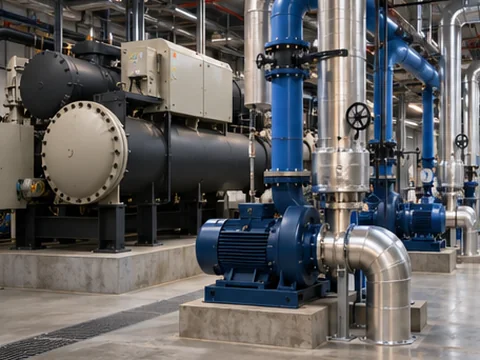
A chiller plant should be evaluated as a system. Even if several chillers are installed, shared pump equipment, switchgear, controls or heat rejection can affect the ability to deliver usable cooling. The Department of Energy data center design guide offers an overview of the cooling system choices that should be reflected in site-specific documentation.
Size the plausible outage beyond equipment count
Have engineering show the plant's operating capacity during preventive maintenance and under a credible failure at peak load. Verify whether a rental chiller can be connected on the site, what power and space it would require, and whether qualified personnel and a supply agreement exist. Include vendor-confirmed timelines for major parts, delivery, installation and validation. Review whether leased equipment or temporary property must be separately scheduled.
Example — the plant is mechanically redundant but operationally constrained
A major chiller fails during work on another unit. Remaining capacity supports the most critical halls. Unaffected equipment continues operating, though tenant capacity is restricted until restoration advances. The operator incurs expedited parts and rental costs. Investigate the cause of the failure and distinguish work required to repair the broken equipment from additional costs incurred to keep the site running. Equipment breakdown wording may use specific definitions and exclusions. A review should also consider the property form, business income period, extra expense wording, and whether different deductibles or limits apply.
Bring a realistic restoration sequence
- Plant diagram and edition date, including supporting utilities and shared controls.
- Installed and available capacity during maintenance, projected growth and peak conditions.
- Condition monitoring, planned service records and replacement estimates from vendors.
- A staged return to normal load with estimated income, expenses and renter obligations during each stage.
Value reinstatement beyond the purchase order
Ask manufacturers and contractors how lead time changes if capacity can be restored through a repair versus a replacement. Determine which supporting items may need to be altered and what commissioning must occur after installation. The financial model should establish whether an accepted partial load can be restored first, as well as the point when halls can meet their normal service obligations. Ask the broker to check valuation provisions for equipment installed with supporting services and the treatment of rush costs. Record actual insurance terms before evaluating whether the business should commit to paying for an expedient option.
Case comparison — electrical damage compromises working equipment
An event in supporting electrical equipment makes several mechanically intact chillers unavailable. Parts and repair capacity may be available for the chilled water equipment, but recovery depends on a different specialized contractor and approval. The plant may also need to demonstrate stable service under current load before customers return workloads. Preserve the damage findings and identify which equipment was impaired by direct damage versus loss of utility within the site. Track access, power and control availability throughout the restoration. Review the equipment breakdown and property forms with the loss investigator and establish what is needed to quantify earned income, periods of suspension and emergency expenses.
To decide whether a rental agreement materially changes retained risk, estimate the capacity it can deliver, date it can become available and financial exposure it avoids. A vendor quote may leave mobilization, final installation or operation to separate parties. Include those commitments and costs before relying on the arrangement.
Include chilled water customers that may have different service options, space needs and loss triggers. Project, operating and customer policies may each apply to different insured interests and phases.