
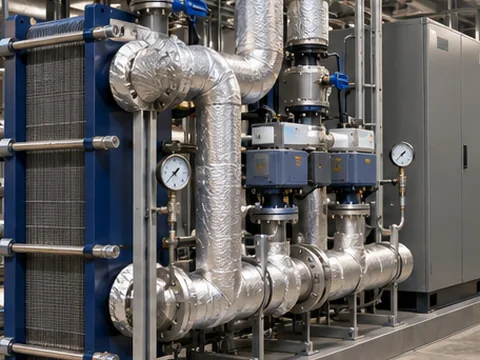
A coolant distribution unit can serve as a defined interface between facility cooling infrastructure and the technology cooling system. Procurement and operating models vary by design. The Open Compute Project coolant distribution unit workstream is a useful technical reference for the equipment family. For the insurance file, what matters is who operates the installed equipment, what load it serves, and where each agreement places responsibility for performance.
Match equipment responsibility to contracted service
A hall could have several units that share a supervisory control system, upstream water loop or supplier maintenance team. Ask facilities staff to mark these common dependencies on a drawing. Identify which party has custody of the unit and local spares, who maintains it, and which party must approve a change to the arrangement during a tenant expansion. Check whether alarm investigation and after-hours access are assigned to teams with different contracts.
Example — two units and one common dependency
An operator planned for one unit to go offline during service. Both units lose capacity following a common control incident, and the hall limits workloads while engineers determine the condition of the equipment. The operator has a restoration expense and customers report outages. Before treating the event as an insured breakdown, establish whether any insured equipment was damaged and which direct event caused the service reduction. Compare the equipment breakdown form, any property or cyber provisions and the relevant exclusions, conditions and endorsements. The SLA could use service-level criteria independent of how a policy defines an insured event.
What an insurer or lender may ask to see
- Unit schedule with location, ownership, values, supported rows and responsible maintenance provider.
- Factory and site acceptance records, stated capacity at service and unresolved exceptions.
- Common dependency diagram showing cooling, controls and power supply.
- Replacement and support terms with a time estimate for a staged return to service, including parts, work and validation.
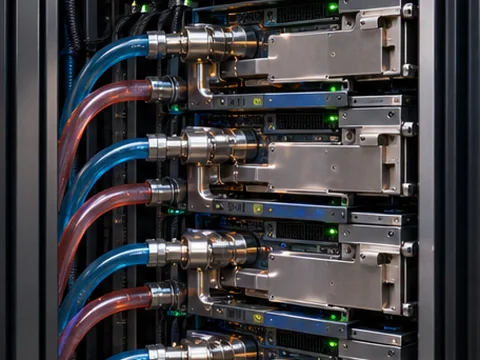
Rate the installed unit and its recovery separately
Document exactly which component groups are part of the distribution unit and which remain in the connected facilities or technology circuits. Underwriters may ask for an itemized valuation of the heat exchange, pumping and control equipment because a replacement unit could require accessory components or manufacturer-specific service. A maintenance visit that restores a measured condition does not necessarily demonstrate that every customer row can carry the approved load. Assign the party that accepts restored capacity and confirm who can provide historical service logs to substantiate the date of recovery.
Another decision — single-unit failure or partial service?
Consider a hall with multiple distribution units and a spare stored elsewhere. A failure in one active unit leads to a temporary transfer. The replacement spare is available but needs manufacturer support, and several customers experience a shorter interruption than the time required for permanent repair. Preserve transfer and load records, correspondence with the service vendor and the work order showing which equipment was replaced. Finance can compare three dates: when the supported load was restored, when normal redundancy returned and when a customer accepted normal service. Under policy wording those dates may bear differently on loss of income, extra expense and ongoing risk. A retention chosen around the permanent repair interval can be inappropriate if a material share of actual expense arises during a much shorter transfer.
Contract and policy alignment
Compare OEM warranty promises with the service contractor's obligations for mobilization and restoration. Identify the effect of a vendor being unable to meet the contract window. Determine which assets are described on the equipment schedule and which losses are contemplated by premises, utility or dependent service language. Document how a customer-owned unit would be handled if the operator is responsible for maintaining but does not own it.