
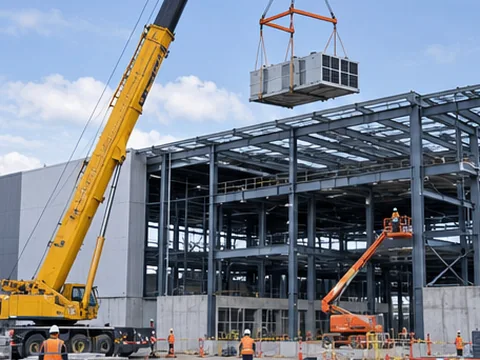
Start with covered project property
Review how the proposed builders risk form identifies the project, insured interests, property and locations. A data center project can involve owner-furnished equipment, tenant equipment, leased cranes, temporary structures, off-site storage and goods in transit. Separate those assets by owner, custody and replacement value. Determine which items qualify, which are subject to a separate limit and which need review under another policy. Include the planned replacement cost of installed equipment, and distinguish restoration values from contract payment terms.
A project with several construction packages needs clarity about the assets in each package. A gas generation plant, switchyard and data hall may have different ownership and payment schedules. Some assets can begin providing services while work elsewhere continues. Confirm the actual boundaries, and have the insureds’ ownership, lender interests and contract obligations reconciled with the form and endorsements.
Read the coverage period with the construction schedule
A summary showing a policy expiration date is only one piece of information. Review forms for provisions addressing completion, acceptance, cessation, transfer of interest, occupancy or use and changes in the project schedule. Review testing limitations, including duration and the equipment or phase affected. Send insurers a dated phasing schedule so they can evaluate early energization, temporary operation and phased handover as planned.
Review how coverage for existing property and tenant equipment is documented, particularly during retrofit work. If equipment arriving early is intended for another party, obtain the written coverage position of both insurance teams. Arrange transition notices and the effective dates of permanent property, equipment breakdown and time-element coverage around specific phase milestones.
Identify what delay in startup can address
A project can miss its commercial operation date for many reasons. Review whether the proposed delay in startup coverage requires a covered physical loss and an actual delay to a specified start date. Identify eligible financial interests, insured parties and forms of loss. Priority questions include the time deductible, indemnity period, covered revenue or standing charges, exclusions and documentation needed to establish the loss. Late delivery, financing problems and general cost overruns should be evaluated separately against the wording.
A development entity’s lost rent, a generator owner’s delayed capacity payments and a contractor’s liquidated damages can have different treatment. A lender’s interest may differ from the operational losses of the eventual tenant. Use a finance workbook showing who earns or pays each amount, when it would begin, and how the agreements treat partial availability. Ask which entity’s financial interest is scheduled on the delay form.
Demonstrate the effect on the critical path
To evaluate a potential delay, begin with the last credible schedule before the incident. Establish the planned commercial date and dependencies and compare what would have happened without the damage to the revised program. Track delays that may have been underway independently. Document mitigation measures, their expected effect and incremental cost. Keep vendor quotes, updated milestones, decision records and comparable scheduling data available for claims review.
A contractor may be able to perform some installation tasks elsewhere while a replacement is fabricated. A developer may be able to energize a hall using another unit or defer the installation of a noncritical package. Record whether these options preserve income, shorten repair or only move the problem to a later phase. Review the policy’s consent and mitigation expenses provisions before relying on reimbursement for special orders or accelerated shipping.
Example — switchboard damage during testing
A switchboard is damaged during energized commissioning. A replacement can be expedited, but the project also has a separately delayed service connection. Engineering identifies a temporary configuration that may allow partial occupancy. The parties need to determine how the policy treats commissioning, the cause of damage, and what part of the project would have started on time had the board been undamaged.
Compare the eligible physical damage and delay losses to the project assets and financial interests scheduled on each form. Document whether the temporary option changes the insured delay, introduces restrictions on testing or triggers occupancy provisions. Identify the tenant agreements for each phase and show when income would have begun. The contract and insurance responses may differ, even when all parties use the same incident date.
Questions for the insurance review
- Are transit and temporary storage locations covered for the actual equipment values involved?
- Which owner, contractor, tenant and lender interests are addressed at each phase?
- How does the form treat testing, commissioning, early use and partial acceptance?
- What event triggers delay coverage, and how are independent delays handled under the wording?
- Which costs or revenue streams appear in the delay schedule, and how were the values calculated?
- Are utility, supplier or other off-site dependencies included where available and appropriate?
- Who must notify each insurer when a milestone, storage site or phasing plan changes?

See data center construction insurance for the party-by-party coordination process and property, equipment breakdown and business income for the operational program review.
Reconcile the project budget with the property limit
A construction budget lists the amounts required to deliver a project. An insurance schedule needs to establish how specified property and costs would be valued after a covered event. Ask the estimating team to show equipment purchase price, transportation, site labor, testing, teardown and reinstatement separately. Have finance and the broker review financing costs, fees and other potential soft costs against the actual insuring provisions and schedules. If contingencies or change orders change project value, record how and when the insured must update the carrier. Some values may be subject to specific reporting requirements, location limits or separate deductibles.
Check two points of maximum concentration. First, identify the period when multiple expensive items may accumulate at a factory, staging yard or temporary warehouse. Second, identify the period when completed installation sits alongside additional work and existing campus equipment. One summary may conceal materially different exposures at those points. Use the data center builders risk guide to compare project boundaries and the installation floater guide to verify what a trade contractor expects its own policy to cover. For an imported or long-distance movement, compare the cargo insurance review with the procurement agreement and the actual custody handoffs.
Compare work packages that depend on the same system
Consider a two-hall campus in which Hall A is scheduled to earn rent after integrated testing, while Hall B will earn capacity charges after later customer acceptance. The shared cooling plant is physically complete before either hall is accepted. A construction casualty affects the plant and associated equipment. The owner proposes a mobile cooling system sufficient to put some of Hall A into partial service while permanent restoration continues. Hall B was already waiting on unrelated tenant equipment.
Document which part of each proposed opening depends on the damaged equipment. For Hall A, the operator may need to establish the date partial service would have begun, the capacity made available by temporary plant and how rent or charges change at each service threshold. For Hall B, calculate the effects of lost cooling availability and the tenant equipment delay independently before comparing them. Repair completion, the first date of reliable temporary operation, tenant acceptance and commercial billing can be separate milestones. Choose evidence that allows the adjustment team to trace each date to a contract, an engineering record or a contemporaneous schedule.
Review who will bear the cost of the temporary system and decide whether to seek approval from the insurer before incurring discretionary expense. A purchase or rental may serve several purposes, including restoring service, improving future redundancy or avoiding consequences under a contract. Give the adjustment team a breakdown of scope, duration and expected effect so those purposes can be analyzed separately. The delay in startup guide explains how to compare the claimed schedule impact with the applicable financial interest.
Establish a procedure for a change that affects both insurance programs
Assign an accountable person to verify the construction and operating insurance positions before the first delivery to an operating area, the first energized test and the first customer use. At each gate, update the project schedule and state the actual work remaining, the extent of commercial use and the parties retaining control. An insurer may need an endorsement or advance notice if the plan changes. Align written insurer communications with the contractor's instructions and the lender's evidence requirements. A record of internal approval is useful evidence of project status, while the policy and insurer confirmation determine whether the insurance arrangement has changed.
Set a written workflow for claims that can involve multiple programs. Have the project team collect asset ownership and custody documentation, the date and nature of testing, and evidence of the pre-loss state. Ask finance to preserve the operational forecast and earned revenue by phase. Route questions about disputed design, defective work, liability or contracting through the relevant specialists and policies. If a design or professional services problem contributed, separately review the contractors professional liability guide and preserve the design and change records.
A risk review is useful at procurement, when the insured might first accept responsibility for costly property, and again before commercial use. Bring an accurate phase schedule and the current owner, contractor, tenant and lender documents. Ask the broker to identify what the current forms address, what requires insurer confirmation or program changes and which costs the owner should plan to retain.