
Establish the insurance date before mobilization
Early works may include site security, temporary utilities, roads, clearing, excavation and foundation preparation. Identify which legal entity authorized activity, when work begins, who owns early improvements and what completed work transfers into later phases. If the main construction policy is still being negotiated, request written confirmation of what is insured before early contractors start or materials arrive onsite.
Preserve baseline site evidence
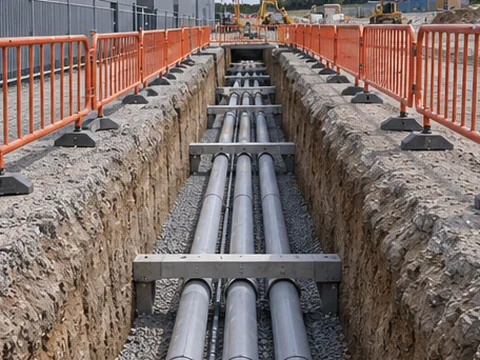
Before disturbing ground, collect photographs, utility information, site condition records, nearby property documentation and responsibility for managing changes. Record who reviews known and unexpected conditions and who can stop or redirect work. The OSHA excavation requirements include provisions on locating certain underground installations. Have the responsible site professionals determine requirements applicable to the specific project and jurisdiction.
Example — damage occurs before the intended main policy date
An early civil contractor damages an existing water service while excavating for temporary utilities. Flooding affects improvements being transferred into the main project and a neighboring business claims damages. Document discovered utility conditions, markout information, the scope of the early contract, the actual date of work and each affected property interest. Identify affected parties and policy periods before allocating repair, third-party liability or schedule consequences.
Underwriting evidence for the early phase
- Award packages, notice-to-proceed dates and a clear line between enabling works and the main build.
- Temporary site plans, public utility information, property values and offsite storage arrangements.
- Evidence of protective measures, reporting procedures, control of early work and issued insurance.
Review project property and liability coverage for eligible work, exclusions, limits, deductibles and applicable subcontractor protections. Ask about later transitions before relying on one policy to apply across phases.

Review which assets exist before the project schedule says they do
The early scope may include items expected to be abandoned after construction and permanent items delivered sooner than the main build's financing milestone. Track location-specific values and reimbursement obligations separately. Identify who owns completed early work while the construction contract or named insured structure changes. For equipment or stock kept temporarily elsewhere, capture location, care requirements, who paid for it, and how its physical protection was verified. Confirm policy changes on effective dates with the responsible parties before the project relies on them.
In another scenario, a weather event damages temporary works and stockpiled materials before protective systems for the permanent campus are installed. Establish the chronology, location and condition of each asset and record whether any materials had been accepted as planned project property. Evaluate emergency expense, physical corrections and any liabilities to downstream parties separately. Obtain proof that appropriate parties were notified, particularly where early works and main construction are arranged through different entities or program periods. Confirm whether restoration can use an alternate sequence without increasing the potential loss to unrelated improvements.
Ask before a subcontractor steps onto the site
- Can the project trace the named parties, scope and effective dates to the earliest mobilization, storage or excavation work?
- What exposures fall on the existing property program, on a new project form, or within the contractor's own services?
- Which parties manage spills, runoff, access or damage to assets outside the footprint, and which contract terms govern response?
Maintain current site photos, purchase approvals and reporting contacts. Make sure contract notices and insurer communications reflect observed site activity, particularly when preconstruction preparations continue while financing or policy documentation is still in progress.
Where a site sits near an existing operation, identify who controls isolation, restoration and tenant notice if early civil work affects ongoing service. Communicate neighboring property and operating dependencies through the contractor and owner teams before authorizing work, along with written procedures for recording the condition of property.