
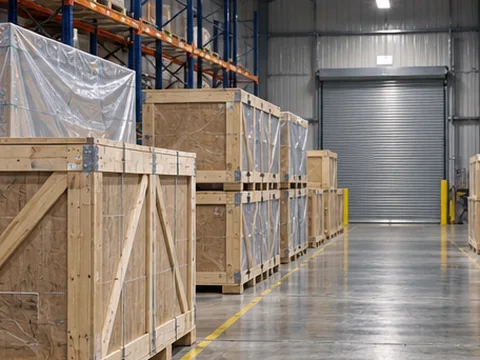
Document journey segments and concentrations
A shipping plan may involve a manufacturer, forwarder, specialized motor carrier, port, transload yard and short-term storage before a contractor takes delivery. For each leg, identify the property, custody, delivery terms, insured value and points where equipment accumulates. Include transport packing, shock or moisture records when specified, and special handling needed to preserve warranty evidence.
Match the shipping terms to actual insurance
Check contract delivery points and who undertakes to obtain insurance. The International Chamber of Commerce guidance on Incoterms describes how adopted rules can allocate buyer and seller responsibilities. Review the chosen rule, named point, contract and issued policies for actual obligations and terms. Identify any exposure during storage or unloading that does not align with the assumed end of transit.
Example — damage is discovered after delivery
A receiver accepts an apparently intact delivery and a qualified technician later finds damage. Establish when the crate or unit was opened, who examined it, who had custody, and whether records suggest an incident in manufacturing, shipping, storage or unloading. Preserve transport documents, receipt exceptions, images, logs and manufacturer findings. Notify parties under applicable contracts and policies and protect the property as appropriate.
Evidence for the insurance review
- Itemized values, sequence of carriers and facilities, named locations, dates and peak shipment accumulation.
- Delivery terms, packing and inspection requirements, and reporting timeframes.
- Specialist replacement quotes, available substitutes, and the probable effect on project completion.
Review cargo or inland marine wording, applicable deductibles, storage provisions, insurer notice or survey conditions and any coverage specific to delay. Carrier liability and insurance recovery should be checked against the underlying terms and evidence.
Plan for late rerouting and higher-value aggregation
Major components may change carrier, warehouse or delivery point whenever a vessel call, route permission or site preparation changes. Require timely notification of material routing or custody changes and document who has approval to accept them. Compare condition reports at each tie point and establish who can retain packaging or electronic records if a discovery requires investigation. Confirm whether several shipments will aggregate temporarily at one location, and how the declared values match the current exposure rather than the planned frequency of delivery.

In a distinct scenario, a storm damages several components in a port storage yard while a project awaits transport authorization. Some items can be repaired locally, and replacing a single item drives the construction team's schedule. Collect transport and warehouse documents, current location, custody, package identification and exact condition. Isolate alternate sourcing costs and any documented consequential loss. Establish whether incidental storage, delayed dispatch, survey requirements, or higher values at the yard affect terms. A claimant may have recourse against a carrier or another party under its agreement, and may also have an insured property interest. Preserve deadlines and rights while obtaining insurance advice.
Put transit assumptions into the project record
- Where do insured interests, reporting obligations and physical custody change when a shipment is delayed, rerouted, or handled at a third-party site?
- How should owners and logistics firms report concentration, revised shipment values and specific replacement constraints?
- What expenditure relates to physical loss, delay mitigation, inspection or unrelated commercial sourcing?
- Does the issued cargo form describe these locations and transit conditions, and are other forms intended to attach at set handoffs?
Share signed trade terms, full route and replacement plans with the parties arranging insurance. Record exclusions or unresolved decisions when relying on nonstandard handling or extended storage.
For components with specialized packaging, record whether inspections require the supplier to be present, where unpacking can occur, and who can authorize movement when there is evidence of damage. This can reduce disputes about changes in condition and preserve evidence of costs attributable to the shipment event.