
Identify who controls the surface and the work zone
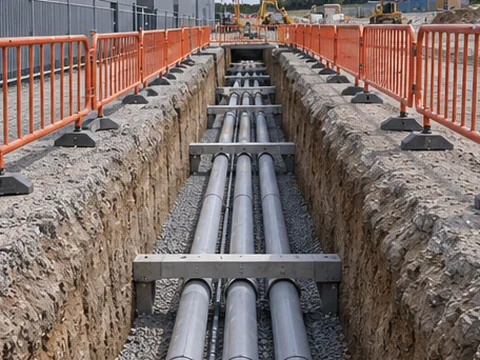
The contractor installing a distribution trench may work near pedestrians, local businesses, storm drains and buried infrastructure. Identify whether the contract includes saw cutting, excavation, installing enclosures, backfill and permanent surface restoration. A temporary patch accepted by a road owner might still leave the crew responsible for reopening the site if the patch settles. Determine when control transfers to the paving contractor or owner and who responds to a complaint outside normal work hours. OSHA's trenching and excavation resources provide worker-safety reference material. FHWA's traffic control manual addresses temporary traffic control. Confirm the standards and traffic plan the authority uses on this particular project.
Illustrative incident and coverage analysis
Several weeks after a fiber project reaches substantial completion, a newly restored area settles. A driver damages a wheel and another property owner alleges water entered its lot after the grade changed. The municipality asks the prime to remove and redo the patch. Evaluate distinct issues: third-party property damage, costs to replace the insured's own installation, defense expense, complaints about drainage design, and time the municipality paid to handle access. A completed-operations provision may be relevant, subject to the allegations, coverage triggers and exclusions. Do not treat warranty or rework costs as covered solely because the incident occurred after completion. Where designs or pollution allegations are involved, evaluate the relevant professional and environmental wording separately.
Evidence for the project file
- The handoff date from opening the excavation to temporary and final restoration.
- Permit status, inspection records and approval for each affected roadway or private access point.
- Allocation of maintenance, barriers, traffic plans and public complaint escalation after handoff.
- Photos before work and at each transition, with the responsible crew and lot clearly identifiable.
- Sample language for guarantees, warranty periods and special restrictions on subcontracting.

Ask the broker whether the application distinguishes open-cut work from directional drilling and trenchless installation so that the declared operations match the loss scenario.
Translate staging into an insured exposure timeline
Follow a single work zone from opening through interim surfacing, utility inspection, permanent restoration and end of any maintenance period. Document the control transfer at each step and the role of third parties. Local access arrangements may vary by block and can include alternate loading routes, periods of maintained pedestrian access or accommodation for an occupied facility. A written release helps establish who was expected to maintain the temporary work after the contractor transferred control. Differences between the permit obligations and the subcontract should be brought to the prime before work begins.
Show how later claims can change the investigation
Consider a partial reopening after the municipality releases a roadway segment. A resident then reports water draining across a temporary transition, and a storefront says its entrance was inaccessible for several hours. Ask whether there is documented damage, an allegation of loss of use, a disagreement about the original route design, or a contractual issue about access. Inspect how coverage terms distinguish the stage and nature of the work rather than expecting the same outcome for each demand. Distinguish financial losses from charges the owner assessed on its own schedule. Those categories may have different policy or contract treatment.
A project manager can prepare a base record by identifying the person who receives third-party complaints and the records the business can collect right away. Before-and-after photos, inspection reports, notices to nearby occupants and repairs logged by time and location each help. Keep weather-related maintenance and subsequent work by other crews identifiable, especially where a problem appears after turnover. The broker can use one realistic completed-work claim and one active excavation claim to test how the proposed liability and professional terms apply.