
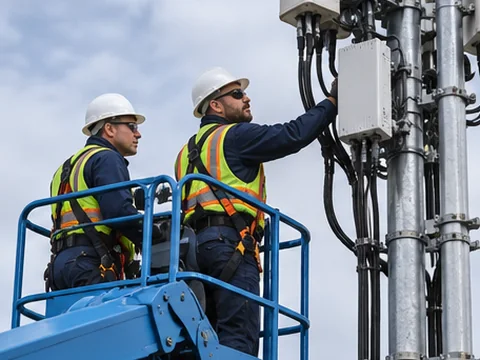
Define the contractor's authority on existing poles
Aerial fiber contractors may hang new cable, transfer existing attachments, replace poles or coordinate with separate utility crews in shared space. Show how much revenue comes from each work type and which work is subcontracted. Obtain the relevant agreement for each pole owner and identify the approved work, handoff points, approvals and outage process. Contracts can assign responsibility for matters beyond attaching the new line, including damage to an incumbent attachment or the cost of returning to resolve a clearance dispute. The FCC pole attachment rule sets out the scope of certain federal make-ready procedures. Check rules and agreements for the particular pole owner and jurisdiction.
Illustrative incident and coverage analysis
During an authorized transfer, an incumbent communications line goes out of service after an attachment shifts. The pole owner sends an emergency crew, an ISP asserts downstream interruption costs, and the general contractor withholds payment until the area is restored. Create separate accounts for repairs to third-party equipment, service failure allegations, replacement of the insured's faulty work, and any payment dispute. Review the actual CGL treatment for damage to existing property, property in the contractor's custody, and subcontractor work. If the insured selected or certified the attachment design, compare that work with its professional liability schedule. Check auto and equipment policies where the incident also involves a line truck or leased lift.
Items to document before placing coverage
- Scope by utility territory and pole owner, including the distinction between communications and power-space activity.
- Approval sequence for the pole list, field changes and notices to other attachers.
- Allocation of incident response, restoration and loss-of-use demands under representative contracts.
- Vehicle, lift and rigging schedules and the contractors approved to operate them.
- Existing incident records and the evidence used to tie or rule out a crew's work.
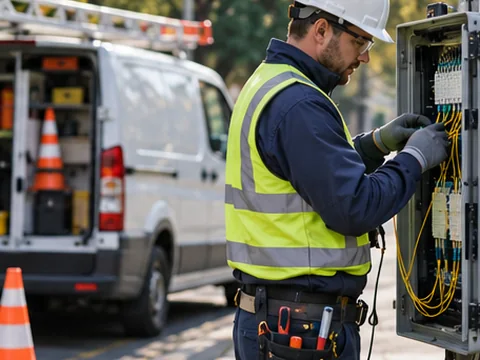
For workplace risk, use the OSHA telecommunications standard as one reference and confirm whether the operation is covered by that standard or construction rules with the employer's safety adviser.
Examine how the project moves between contractors
For many projects, the designer, pole owner, incumbent attacher and aerial installer each deal with a different list of poles or version of the work package. Check who maintains the accepted inventory and whether a crew can distinguish a routine transfer from work that has been referred for further review. Look for an auditable release process by segment so that the prime can identify which team held authority on the incident date. A dated acknowledgment from the utility or incumbent is particularly useful when one team's delayed work affects a second team's obligations.
Review contractual and fleet scenarios together
Consider two related events. In one, a truck under the contractor's control strikes adjacent property during positioning. In the other, a lift is stationary when materials fall and damage an existing attachment. The facts can affect which policy and insured is implicated, including whether a vehicle's use, mobile equipment terms or a subcontractor's responsibility matters. Review who schedules the unit, whether it is rented, whether it is leased with an operator and who has insurance or contractual responsibility. Compare the exact forms with each hypothetical and record which evidence the loss team should retain.
A requirement that the contractor provide evidence of coverage for the pole owner presents a further question. Check agreed additional insured wording and the relevant stage of work, particularly on a route where a commissioning or transfer obligation continues after installation. If the attachment is later moved or inspected by another firm, preserve photos and work logs as of the first crew's handoff. Those records can resolve questions about original installation, later changes or the pre-existing condition of shared infrastructure.